Being a type one diabetic unfortunately means an array of complications could creep up when we’re least expecting them to, but fortunately there are actions we can take to prevent and catch anything untoward early. A diabetic eye screening is one of them!

If this is your first time hearing that this is even a thing – I advise you to check out the NHS website for more information. This is because I am not a medical professional, but rather a patient sharing my experience.
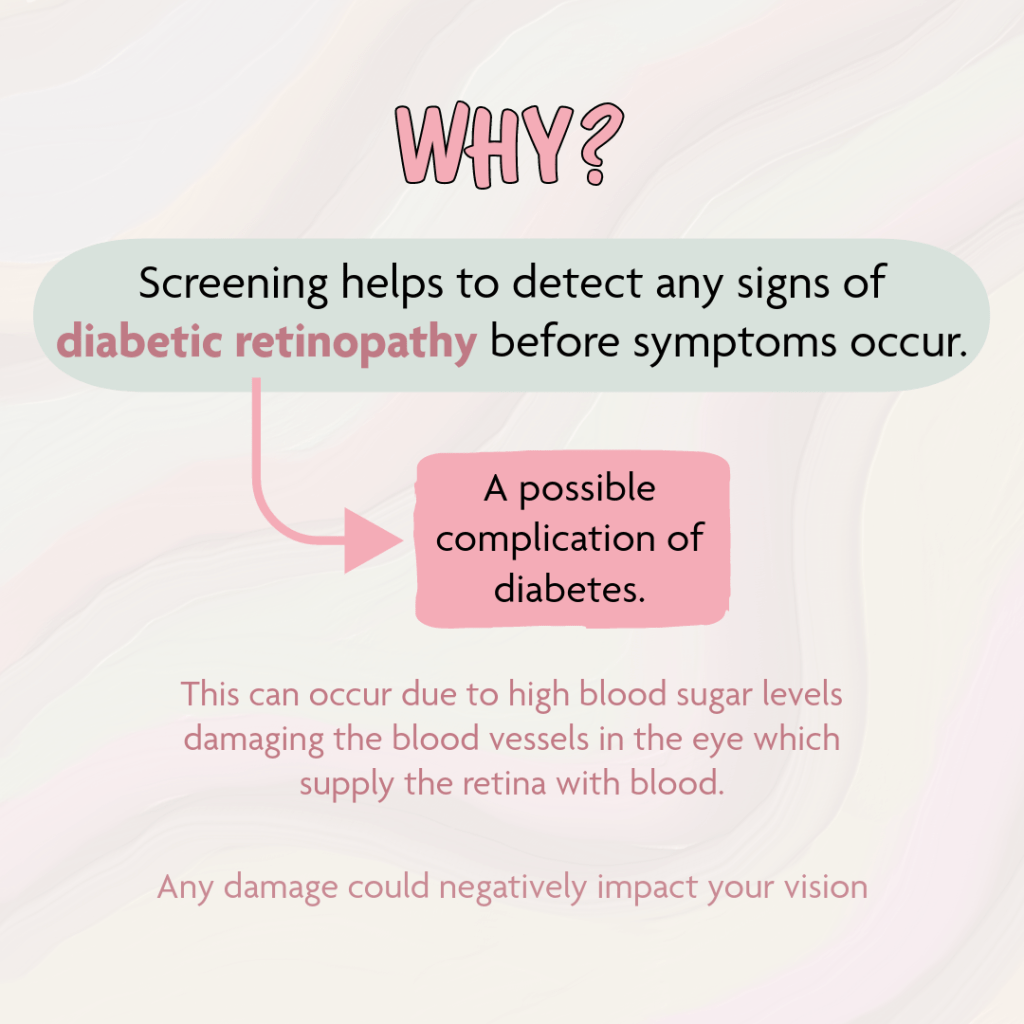
In a nutshell, the screening is key to detect any signs of diabetic retinopathy as early as possible. This means that treatment can be administered to slow down any progression of the disease.
So what actually happens?
Let me guide you through step by step what happened to me in my screening appointment.
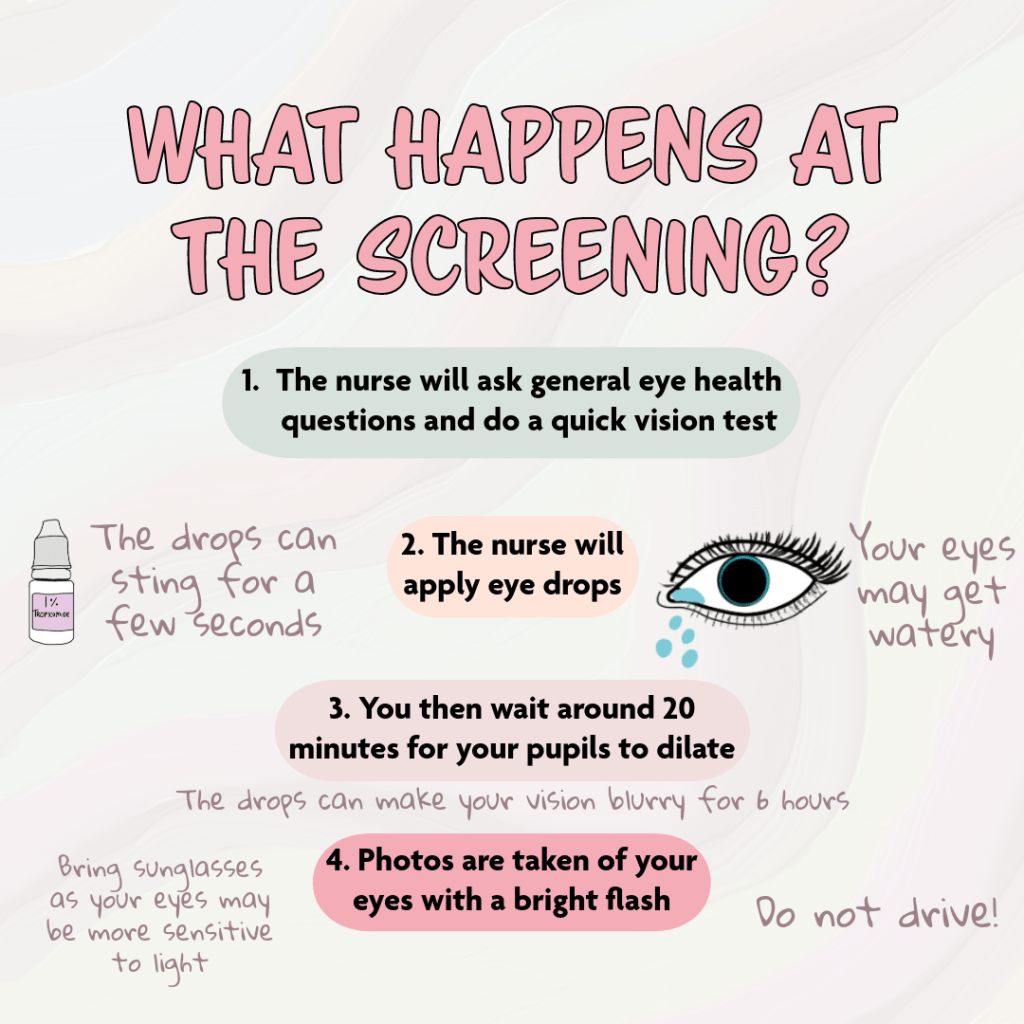
Firstly, I was asked general questions about my eye health: if I had any problems with my eyes, if I wore glasses or contact lenses for distance, if I had visited an eye hospital before, etc. This was followed by a quick vision test where one eye was covered and I was asked to read the smallest line of text in the distance.
Next came the fun part – the eye drops (1% tropicamide)! The nurse stood slightly behind me, asked me to tilt my head back, then squeezed what felt like a flood of eye drops into my eyes, but realistically it was a very small volume of liquid. My nurse done this part very quickly. I was told to expect a similar sensation to getting soap in my eyes.
Indeed, my eyes stung, filled with tears & if I wasn’t prepared I might have panicked at the rush of uncomfortable feeling. However, I think this lasted 10 seconds. Which is not a long time. At all. My advice is to take deep breaths and know that it will pass, and if it doesn’t, you’re in the right place to be dealt with surrounded by medical professionals.
With a tissue in hand, dabbing my soaking wet eyes, I was asked to sit in the waiting room for around 20 minutes. During this time the drops made my pupils dilate. This allows photos of the retina in the back of the eyes to be taken. Don’t ask me about the science behind this but I’m sure there’s some logic there.
My favourite part about this is looking around the waiting room and trying to spot fellow diabetics with the dilated eyes. However this was sadly made difficult by the fact my vision became blurrier than normal.
Once the 20 minutes had passed, I was brought back into the nurse’s room. I was asked to rest my chin on that optician eye machine for pictures to be taken of my eyes. I followed a green dot to know where to look, and then there was a bright flash. There were 4 bright flashes in total, equivalent to 4 photos of my retinas.
Annoyingly, the results are not given there and then. Usually, there is a wait of around 2-4 weeks to find out if there are any signs of retinopathy via letter.
So what to expect once the appointment is over?
Personally, my eyesight went blurry for a few hours, and there was general discomfort, but the not any pain. I could still see, but I had to wear sunglasses over my glasses as despite it being January in the UK, my appointment was mid day, and the sun was the brightest in the history of ever, I think.
Which brings me to my next recommendation – bring sunglasses! This was my first year I forgot to do this, and the walk home in the strong sunlight was very dramatic, as I documented on my tiktok/Instagram reel.
So definitely don’t drive, get someone to meet you if you can, and bring sunglasses. It’s really not that bad and the benefits of screening definitely outweigh the short term discomfort.
Good luck and thank you so much for reading!
Love, Lydia x
 LYD1A KERR
Leave a comment