
The onset of Type 1 Diabetes can be prolonged, so it is important to be on the look out for signs and symptoms which could indicate the development of T1D.
As Type 1 Diabetes occurs when the pancreas no longer produces insulin, the symptoms are mainly due to the fact that this causes high blood sugar levels.
The symptoms of undiagnosed diabetes can be similar to the symptoms that people with diagnosed diabetes experience with high blood sugar. This is because the root cause in both cases is a lack of insulin.
First, I’ll cover the classic symptoms, known as the “Four T’s”, then I’ll include some of the lesser known symptoms of undiagnosed T1D.
Please note I am not a medical professional, and this is just my experience. Consult your healthcare provider for advice if you are concerned.
The Four T’s: Thirsty, Tired, Thinner, Toilet
The Four T’s are a classic combo of easy to remember symptoms!

Thirsty:
Increased thirstiness may present as though your mouth feels extremely dry, and no amount of water can make it go away. This is the body putting the thirst mechanism into overdrive to counteract the amount of sugar in your bloodstream.
Tired:
Increased fatigue may be felt as an all over, full body tiredness. Sleeping for long periods of time, and napping throughout the day, may be common. This is because the body is not able to break down the sugar in your blood stream which would otherwise give you energy.
Thinner:
You may notice unintentional weight loss, i.e. your diet or exercise hasn’t changed enough to warrant a drastic difference. This is because the body breaks down fat stores to try and access energy.
Toilet:
You may need to go to the loo more often, and pass more wee than usual. It may look slightly different in appearance. This is because the kidneys go into overtime to try and expel the excess glucose via your urine.
Lesser known symptoms
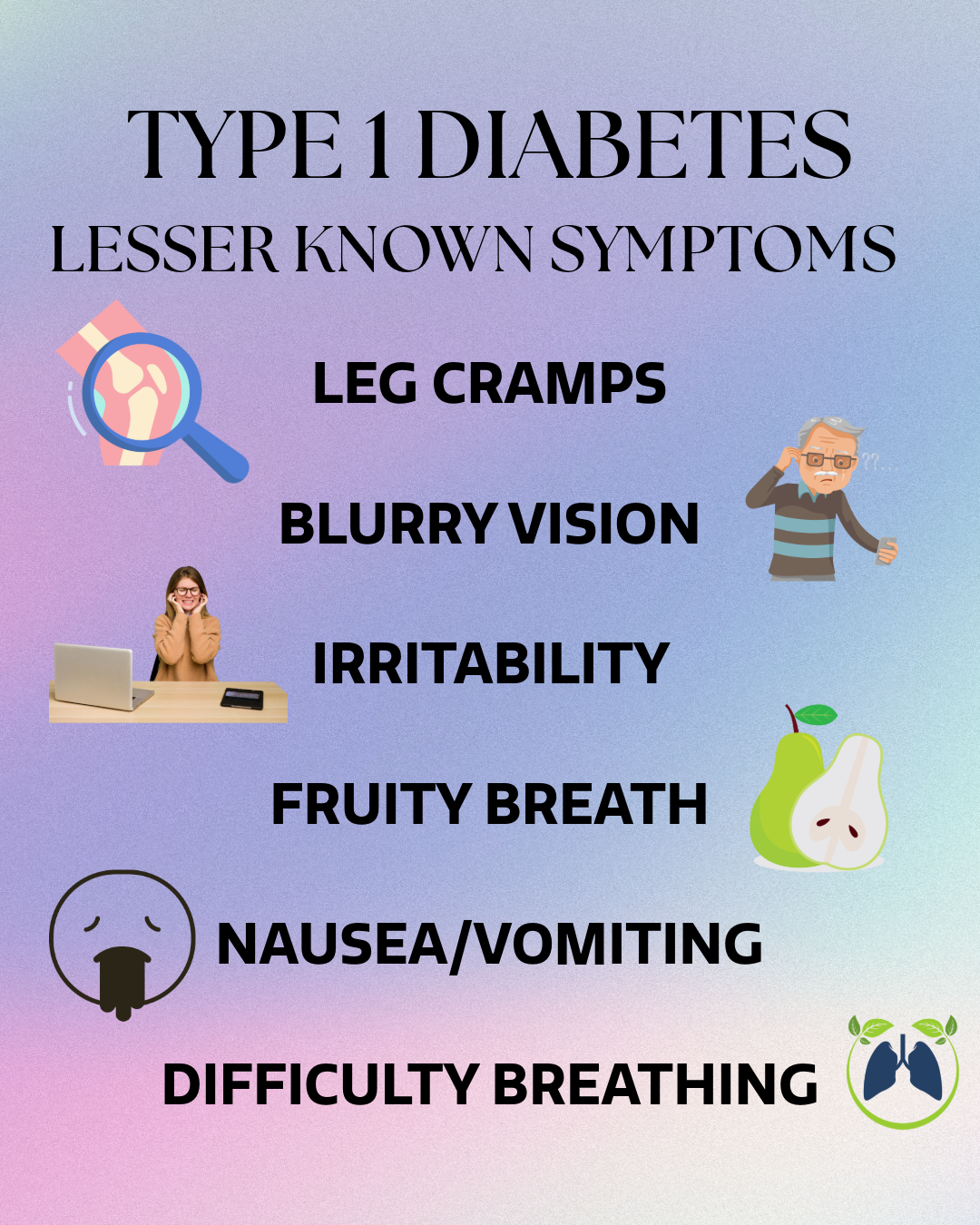
Leg cramps:
The calves in your legs may have a strong ache which can’t be cured by stretching.
Blurry vision:
Your eyesight may become blurry and it may feel like there is fluff or small hairs stuck in your eyes.
Irritability:
You may feel more annoyed at small, non-problematic events than usual.
Nausea/vomiting:
Vomiting is a sign of DKA, a life threatening condition which requires immediate medical attention and hospitalisation. This is another mechanism your body uses to expel ketones.
Fruity breath:
Ketones, which are produced in DKA as the body’s survival mechanism, have a fruity scent, which can make a person’s breath smell like pear drops.
Struggling to breathe:
This is a sign of severe DKA and requires immediate medical attention. If you are ever struggling to breathe call an emergency number immediately.
The more you know!
It’s important to note that the onset of type 1 diabetes symptoms can be sudden and severe, especially in children and young adults.
If you or someone you know experiences any of these symptoms, it’s essential to seek medical attention promptly for proper evaluation and diagnosis.
Early detection and treatment of type 1 diabetes are crucial for preventing complications and maintaining optimal health and well-being.
Please check out the NHS or the Diabetes UK website to find out more about T1D symptoms.
Thank you for reading!
Love, Lydia x

 LYD1A KERR
Leave a reply to Type 1 Diabetes Research: Age at Diagnosis – LYDIA KERR Cancel reply